
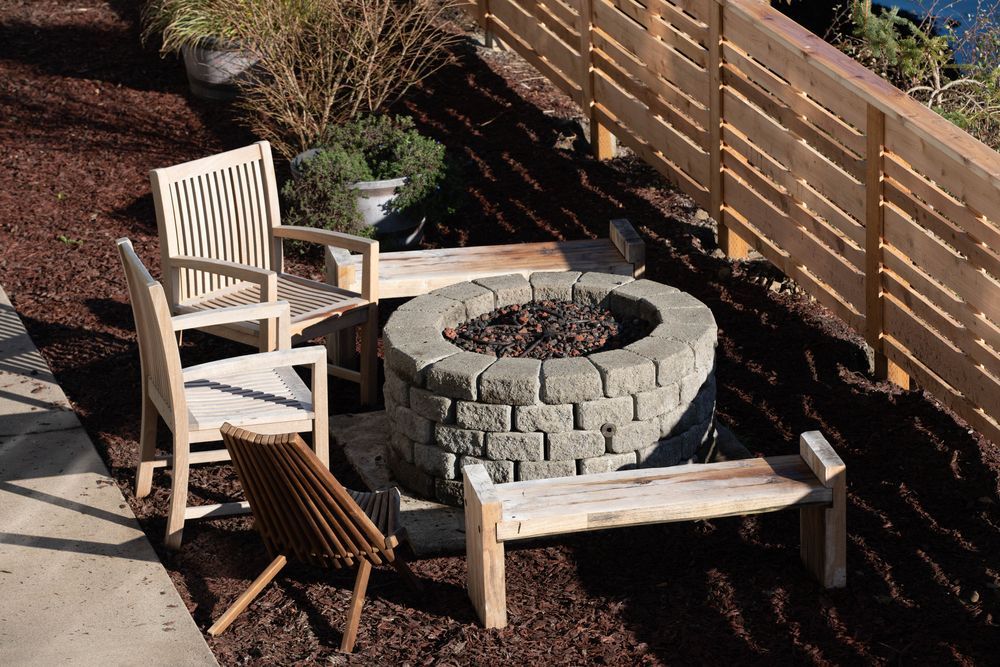
Build a Year-Round Gathering Space Outdoors
Fire Pits in Dahlonega for extending outdoor use during cooler months and adding a functional centerpiece to patios
BC landscaping and Hardscapes builds custom fire pits for homeowners in Dahlonega who want a defined space for evening gatherings without relying solely on indoor heating. You see this feature added most often to existing patios or as the anchor point for a new backyard layout, where seating and pathways orient around the fire. The result is a usable outdoor area that stays functional through fall and winter instead of sitting empty once temperatures drop.
A fire pit installation involves selecting materials that match surrounding hardscape elements like retaining walls, pavers, or stone borders, then constructing a fire-safe enclosure that contains flame and heat while allowing airflow. The pit can burn wood or connect to a gas line, depending on your preference for maintenance and flame control. In Dahlonega, many properties have sloped yards or wooded edges, so placement considers wind patterns, proximity to structures, and clearance from overhanging branches that could catch sparks.
If you are planning a patio upgrade or want to make your backyard more usable after dark, contact BC landscaping and Hardscapes to review site conditions and design options that fit your existing landscape.
Material Choices and Construction Process
The crew begins by excavating the fire pit location to a depth that accommodates a gravel base for drainage and stability. A steel ring or masonry wall forms the inner liner, which contains heat and protects the outer structure from cracking. The outer wall is built with stone, brick, or concrete blocks that match your patio or walkway, and mortar joints are finished to shed water and resist freeze-thaw damage. Gas lines, if included, are trenched in before the base is poured, with a shutoff valve installed within reach of the seating area.
After construction, you will see a raised or in-ground structure with a defined fire bowl and surrounding cap stones wide enough to rest drinks or small items. The flame will sit at a height that radiates heat outward without sending smoke directly into seating areas, assuming the pit is placed where prevailing wind carries smoke away from the house. BC landscaping and Hardscapes positions the pit to integrate with existing landscape beds, retaining walls, or outdoor kitchens, so the feature looks like part of the original design rather than an added element.
Wood-burning pits require periodic ash removal and occasional repointing of mortar joints, while gas units need annual inspection of burner ports and valve connections. The service includes building the pit structure and connecting gas lines if specified, but does not cover permitting or gas appliance certification, which may be required depending on local code in Dahlonega.
Homeowners often ask about fuel type, size, and how the fire pit will fit with other backyard features, especially if they are planning seating walls or outdoor lighting at the same time.
Common Questions About Fire Pit Design and Use
What size fire pit works best for a typical backyard?
Most residential pits measure between three and five feet in diameter, which provides enough flame for warmth and ambiance without overwhelming a small patio or requiring excessive clearance.
How far does the fire pit need to be from the house or deck?
Building codes typically require at least ten feet of clearance from structures, though the exact distance depends on materials, fuel type, and local regulations in Dahlonega.
Why would someone choose gas over wood for a fire pit?
Gas units light instantly, produce no ash, and allow precise flame control, which makes them easier to manage if you use the pit frequently or want to avoid storing firewood.
When does a fire pit need a surrounding seating wall or patio?
A dedicated seating area keeps guests at a safe distance from the flame and defines the gathering space, especially if the pit sits in an open yard without existing hardscape to anchor furniture.
What happens if the mortar joints crack after installation?
Cracks usually result from settling or freeze-thaw cycles, so repointing the joints with fresh mortar restores the seal and prevents water from entering the wall cavity.
If you are ready to extend your outdoor season or want to add a focal point that organizes your backyard layout, reach out to BC landscaping and Hardscapes to discuss material options and site-specific design details.