Stop Erosion Before It Reshapes Your Property
Retaining Walls in Dahlonega for sloped yards losing soil and stability after heavy rain
BC Landscaping and Hardscapes builds retaining walls that hold back soil, redirect water, and turn steep or uneven ground into stable, usable yard space. If you own property in Dahlonega where the terrain shifts from one elevation to another, you know that slope creates both drainage problems and limits how much of your land you can actually use. A retaining wall changes that by creating level tiers, stopping erosion before it undercuts driveways or foundations, and giving you flat areas where you can plant, build, or simply walk without sliding.
This service involves excavating the slope, preparing a gravel base for drainage, and stacking modular block or natural stone in a way that resists the weight and water pressure behind it. In North Georgia, elevation changes are common, and seasonal rainfall moves quickly downhill, carrying topsoil with it. A properly built retaining wall includes a drainage system behind the blocks so water does not build up and push the structure forward over time.
If your yard is losing ground or you want to expand the area where your family can gather outdoors, reach out to discuss what a retaining wall can do for your property in Dahlonega.
What Makes a Retaining Wall Hold
You need a wall that stays in place year after year, even when water saturates the soil behind it. BC Landscaping and Hardscapes uses segmental retaining wall blocks that interlock and rest on compacted gravel, not bare dirt. Each course is checked for level and setback, so the wall leans slightly into the slope rather than standing straight up. This prevents the soil from tipping the structure forward when it gets wet and heavy.
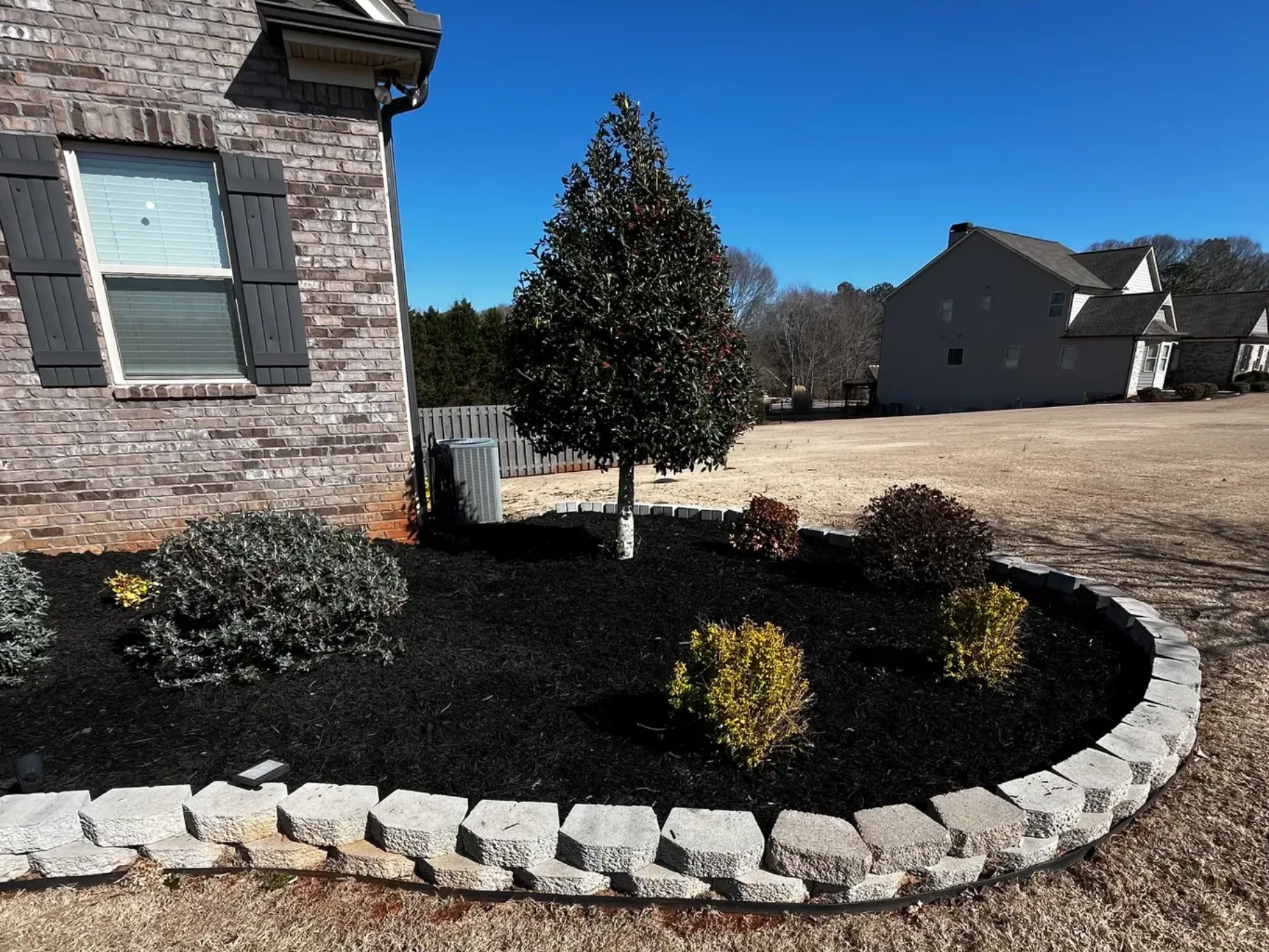
After the wall is complete, you will see clean horizontal lines that follow the shape of your yard, and the ground behind the wall will stay where it belongs. Water that used to run down the slope and pool near your house will instead drain through the gravel layer behind the blocks and exit through weep holes or perforated pipe at the base. The area in front of the wall becomes a flat, plantable space you can mulch, sod, or pave.
Walls taller than four feet often require a geogrid fabric that ties the wall back into the hillside for additional strength. Curved designs and tiered walls are used when the slope is too steep for a single structure. The material choice depends on the look you want and the load the wall must support, but the drainage and base preparation remain the same across all installations.
Homeowners in Dahlonega frequently ask how retaining walls handle the region's clay soil and seasonal weather patterns. Here are answers to the most common questions.
Questions About Building on Sloped Ground
How deep does the base need to be?
The trench is dug below the frost line and filled with at least six inches of compacted gravel to prevent settling and allow drainage beneath the first course of block.
What happens to water that collects behind the wall?
A layer of gravel and filter fabric runs the height of the wall, and perforated pipe at the bottom carries water away so pressure does not build up behind the blocks.
When is a permit required?
Walls over four feet tall typically require a permit and engineered plans, especially if they support a driveway or sit near a property line.
Why do some walls lean forward after a few years?
Poor drainage or no gravel backfill allows water to saturate the soil, adding weight and pushing the wall out of alignment over time.
How long does a retaining wall last?
When built with proper drainage and a solid base, segmental block walls in Dahlonega last decades without shifting or cracking, even through freeze-thaw cycles.
BC Landscaping and Hardscapes works with properties where the ground does not cooperate, and a retaining wall is the difference between a yard that drains correctly and one that loses soil every spring. If you are ready to stabilize your slope and add functional outdoor space, contact the team to walk the site and talk through options that fit the shape and grade of your land.