Cover Beds Quickly With Low-Maintenance Ground Layer
Pine Straw Additions in Dahlonega for moisture retention and root protection in warm-season landscapes
BC Landscaping and Hardscapes spreads pine straw across residential plant beds in Dahlonega, giving you a cost-effective ground cover that holds moisture, insulates roots, and creates a clean, uniform appearance. You choose pine straw when you want a natural look that blends with wooded settings, a material that installs quickly, and a cover that does not compact or form a hard crust over time. Pine straw is widely used across Georgia landscapes because it performs well in warmer climates and breaks down slowly without requiring frequent replacement.
Installation involves raking out old debris, edging bed lines, and spreading fresh pine straw to a depth of two to three inches. The loose, needle-like texture allows water and air to reach the soil while blocking sunlight from weed seeds. Pine straw conforms easily around plants and irrigation heads, and it does not attract termites or retain excess moisture against building foundations.
If you need a seasonal refresh or a low-maintenance solution for your plant beds, contact BC Landscaping and Hardscapes to schedule a pine straw installation that fits your property and budget.
Why Pine Straw Works Well in Georgia Landscapes
You will see the crew spread bales of longleaf or slash pine needles evenly across each bed, tucking the straw around plant bases and along bed edges to create a finished look. The material interlocks naturally, resisting wind and rain washout better than loose leaves or uncomposted bark. BC Landscaping and Hardscapes adjusts the straw depth based on bed exposure and plant type, keeping coverage consistent without smothering low groundcovers or new plantings.
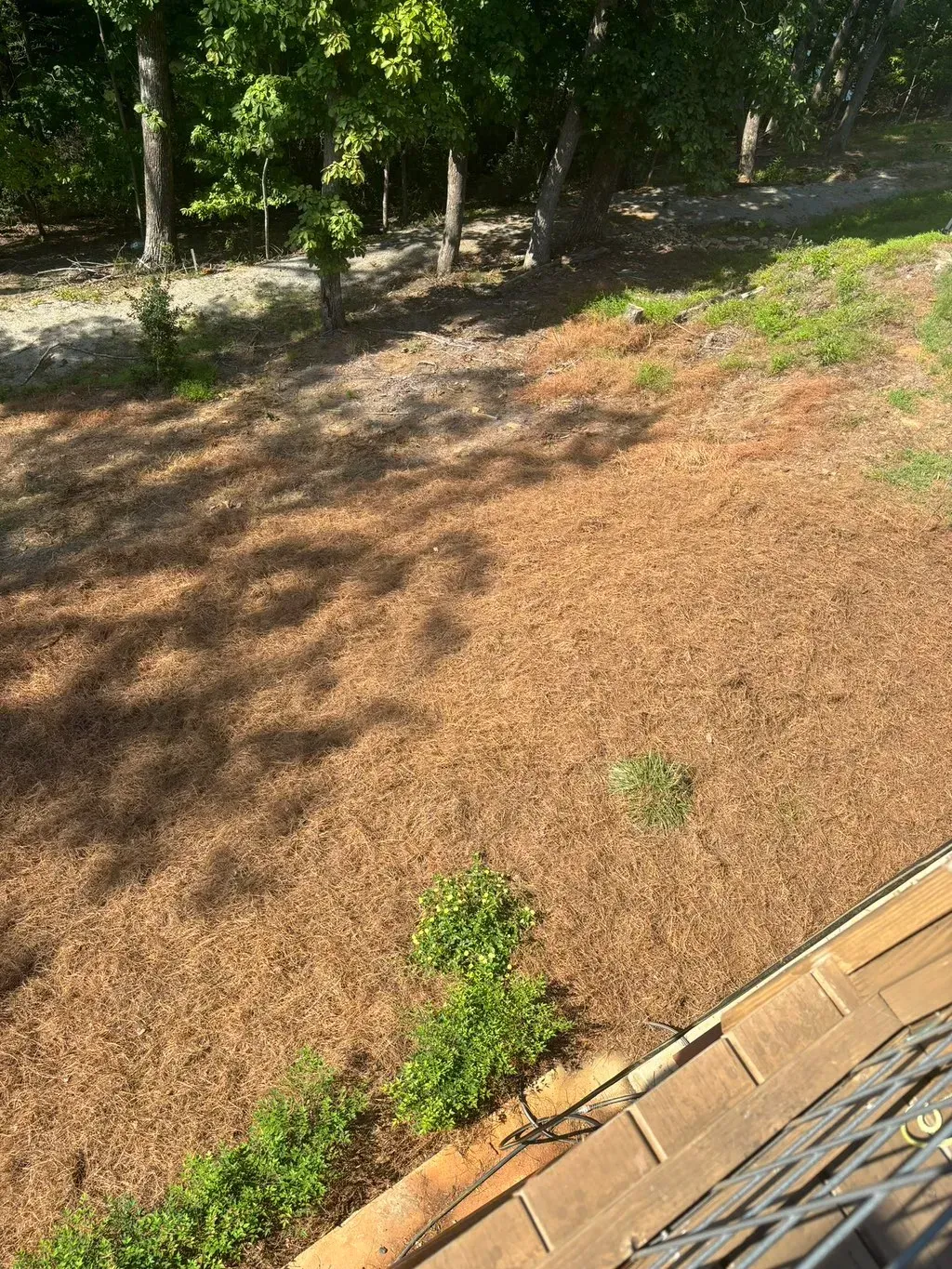
After installation, you will notice that the beds take on a warm, reddish-brown color that complements both traditional and naturalized landscapes. Soil beneath the straw stays cooler during summer heat, and plant roots remain hydrated longer between waterings. The straw settles slightly over the first few weeks but continues to protect the soil and suppress weeds throughout the growing season.
Pine straw additions pair well with mulching and ongoing landscape maintenance services for properties that need year-round ground cover management. The service does not include plant installation, bed edging, or weed removal beyond basic clearing before straw application. Pine straw typically lasts six to twelve months depending on exposure and weather, and it can be topped off or replaced as needed to maintain coverage.
Property owners in Dahlonega often ask how pine straw compares to mulch, how long it lasts, and how it affects plants and soil over time.
Common Questions About Pine Straw and Bed Maintenance
What makes pine straw different from hardwood mulch?
Pine straw is lighter, installs faster, and allows better airflow to the soil, while mulch provides a denser layer and breaks down into organic matter more slowly.
How often should pine straw be refreshed?
You should add new straw once or twice a year depending on wind exposure and how quickly the existing layer decomposes or thins out.
Why is pine straw popular in warm climates?
The loose texture prevents heat buildup around plant roots, and the material does not retain moisture against foundations or invite pests like some organic mulches.
When is the best time to install pine straw in Dahlonega?
Early spring and fall are ideal because beds are prepped for new growth or winter dormancy, but pine straw can be added any time of year as a quick refresh.
How does pine straw affect soil acidity?
Pine straw has a minimal impact on soil pH as it decomposes, making it safe for most landscape plants without requiring pH adjustments.
BC Landscaping and Hardscapes can combine pine straw installation with other seasonal maintenance to keep your property looking managed and healthy. Reach out to discuss coverage options and scheduling that aligns with your landscape care routine.